
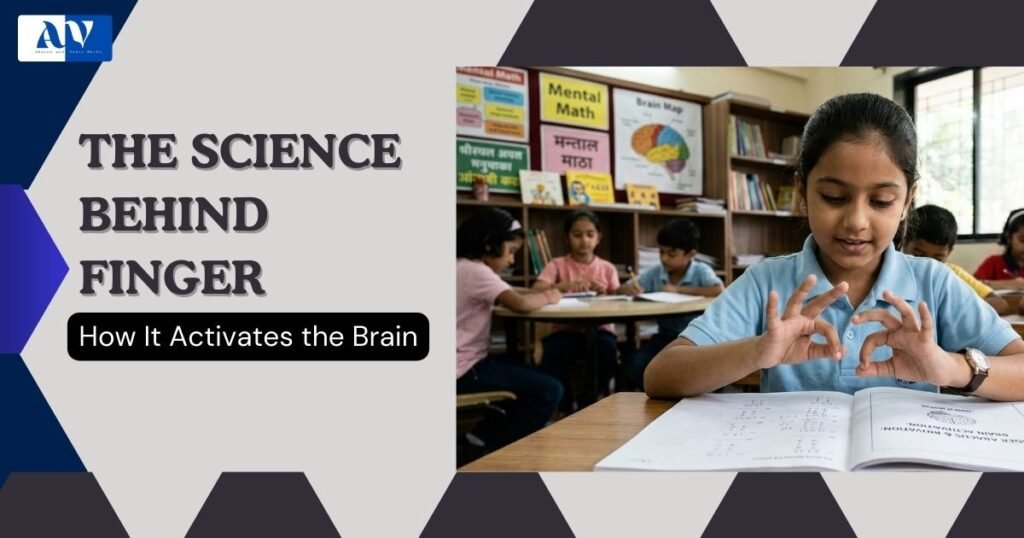
Starting out in math, kids might find numbers puzzling and hard to grasp. Still, a few solve problems fast, without hesitation. Why does this happen? Usually, the answer lies less in repetition and more in how they learn.
Inside young minds, Finger Abacus training lights up more than just motor skills. When kids picture an abacus in their hands, neural pathways start linking vision, touch, and logic. This imaginary tool isn’t play—it nudges regions responsible for memory and attention into gear. Instead of rote learning, movement-based thinking takes center stage. Picture a child moving beads only they can see—those motions trace patterns across brain networks. Science shows such training sharpens how fast numbers are processed. Not magic, but rewired connections doing quiet work beneath.
Finger Abacus Meaning?
Finger Abacus means children imagine a counting tool inside their head, using finger movements that match adding, taking away, multiplying, or splitting numbers. Over time, those gestures become second nature—no pen, paper, or machine needed, just motion trained through doing it again and again. Numbers come alive through set ways of placing fingers. Speed builds as thinking links to small physical cues.
Fingers start it all, yet slowly fade as thought takes over. Calculation slips into the mind, quiet and unseen. Tools fall away, left behind like old habits. What remains lives inside, a silent number dance.
Numbers shape how we think. Brain growth happens through these steps—which is why Finger Abacus training for children supports long-term cognitive development.
Brain Number Processing
Figuring out Finger Abacus learning means looking at how our mind works with numbers. One step before that, though, is seeing how thoughts turn digits into actions inside the head.
Out of nowhere, neurons spark across different parts of the brain as a kid figures out a math question.
The front part of your brain handles choices. This area manages clear thinking when you face decisions. It steps in when sorting out problems needs reason instead of emotion.
Numbers make sense because of a brain area tucked near the top back part. This spot handles how we grasp amounts and math ideas.
- The motor cortex (controls finger movement)
- The visual cortex (helps with mental imagery)
Finger Abacus practice wakes up more parts of the mind than old-style math does. While working through numbers, it links different sections together—building stronger pathways along the way.
What gives it strength is how it pulls in sight, sound, and touch together. Sensations link up, build a grip that sticks.
Left Brain Meets Right Brain
Above all else, the mind splits down the middle into twin halves.
Logic lives mostly in the left side of your brain. This part breaks things down step by step. It likes order and patterns because clarity matters here. Thinking that follows rules? That comes from this area too.
Imagination lives in the right half of your brain. Picture-making shows up strongest there, too. Creativity? That’s handled here instead of the left. Visualization comes naturally to this side. This part takes charge when you dream in pictures.
Most classic ways of doing math light up just one side of the mind. Using a Finger Abacus method, on the other hand, demands something different entirely:
- Logical processing (left brain)
- Visualization of beads (right brain)
- Coordinated finger movement (motor function)
- Memory recall (working memory system)
A steady pattern of activation supports growth across both sides of the mind.
Picture a child imagining an abacus inside their mind—this act sharpens the right hemisphere’s ability to handle mental images. While working out sums, the logical side of the brain lights up, rooted in sequence and structure. Together, through practice that links seeing with reasoning, thinking becomes more fluid and adaptable.
Brain Adapts By Reinforcing Connections
Learning shapes how nerve cells link up, thanks to a built-in feature of the mind that adjusts wiring over time. Repetition nudges these pathways into new arrangements, showing thought isn’t fixed but fluid.
Each session of Finger Abacus training lights up brain pathways tied to:
- Memory
- Attention
- Motor coordination
- Number processing
These pathways become stronger.
Faster moves come naturally after repeating actions, thanks to how the mind adapts. Over time, answers show up like background habits because repeated tries build hidden pathways.
This happens because kids who learn Finger Abacus math techniques tend to show:
- Faster calculation speed
• Improved concentration
• Better memory retention
• Stronger problem-solving skills
Faster connections form inside the mind over time. Efficiency grows as thinking pathways adapt.
Motor Skills and Cognitive Growth
Each bead feels the slow path of skin brushing close, mind hushed. Slowness shapes every touch, attention woven without noise. Midway through, the rhythm takes hold—small adjustments shaping steady progress. Instead of free motion, each placement stands for a fixed number. Because of this pattern, brain areas tied to movement wake up through repetition.
Fingers dancing through precise motions during math tasks build stronger bridges in the brain between movement and thinking areas. Studies point out how tightly hand control ties into mental growth when kids work numbers by shifting digits carefully.
This coordination improves:
- Hand-eye coordination
- Processing speed
- Multi-tasking ability
Fingers moving through space help thoughts stick around longer — a key benefit of structured Finger Abacus classes.
Seeing Numbers A Different Way
What catches attention in Finger Abacus learning? The shift from moving fingers to picturing the moves inside your head. Moving hands fades as thinking ahead grows stronger. Instead of touching imaginary beads, you just see them now.
Far into practice, fingers stay still while solving numbers. Rather than touching real beads, minds picture a tool that isn’t there. Thoughts slide counters left and right without weight or touch. This inner image works like the physical version once did.
This strengthens:
- Visual memory
- Spatial awareness
- Capacity of working memory
Pictures living inside your head can be moved around like puzzle pieces. This kind of thinking boosts how you understand stories and work through numbers while shaping new ideas too.
Sharper Attention Over Time
Finger Abacus training for children requires focus and repetition:
- Listen carefully
- Visualize clearly
- Move fingers accurately
- Count figures inside your head
Focusing on long periods becomes necessary.
Focusing gets easier when practiced often, while interruptions fade away. Kids who work on Finger Abacus programs tend to pay better attention elsewhere at school — parents see it clearly.
This happens since managing focus works much like a muscle, yet Finger Abacus practice trains it regularly.
Working Memory Enhancement
A space inside your mind holds thoughts just for a while, shuffling them around. This spot matters because it helps you learn, follow ideas, and make sense of problems. Not permanent storage—just enough time to work things out.
Children using Finger Abacus for math:
- Remember previous numbers
- Add or subtract mentally
- Track changes step-by-step
Going over these mental steps builds how much information they can hold at once.
Stronger working memory leads to:
- Better academic performance
- Improved reading comprehension
- Enhanced reasoning skills
Confidence Built by Understanding Thinking
Confidence grows when the brain learns—not only do skills get sharper. What happens inside shapes how someone stands tall in daily life.
It clicks one day—handling tough math fast with Finger Abacus training makes kids trust themselves more.
When you feel sure of yourself, fear around math fades. As that worry lifts, thoughts move more freely through problems. With space to think, results grow stronger without force.
A positive loop begins here.
Research on Learning with the Abacus
Studies across different nations reveal kids who learn with an abacus often show:
- More activity in visual-spatial brain regions
- Faster mental arithmetic processing
- Improved cognitive flexibility
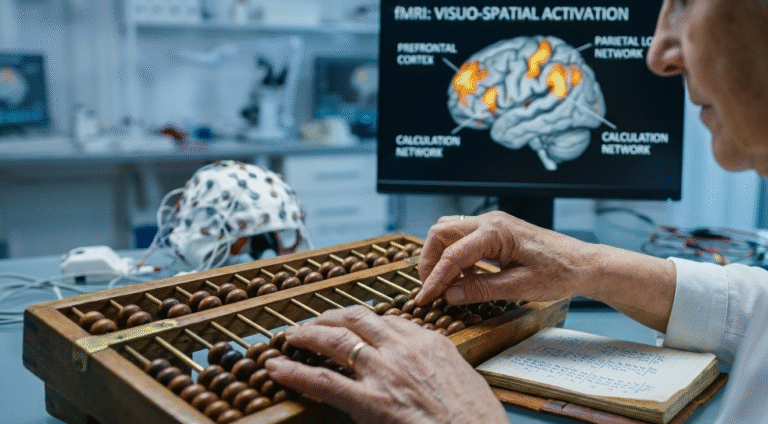
When skilled learners work out math problems, brain scans show more action in regions tied to seeing images and handling numbers. Visualization centers fire up just as much as parts that manage logic.
With consistent Finger Abacus practice, the mind links number skills tightly to visual thought. This is structured brain training—not rote recall.
Beyond Math: Brain-Wide Advantages
Finger Abacus training aims at better calculations, yet shapes more than just numbers.
Students often show improvement in:
- Logical reasoning
- Creative thinking
- Academic confidence
- Memory recall
- Listening skills
When the brain tackles several thinking tasks at once during practice, gains show up in unrelated areas too.
Why Start Early?
Young brains change easily because they’re still growing. New paths form fast when little minds meet fresh experiences.
Because brain pathways grow so much early on, learning Finger Abacus during childhood shapes lasting connections. Timing matters as much as effort.
Starting early helps children:
- Improve processing speed
- Build concentration habits
- Reduce fear of mathematics
- Strengthen analytical thinking
Abacus and Vedic Maths Aid Brain Growth
At Abacus and Vedic Maths, Finger Abacus classes focus on:
- Step-by-step skill progression
- Guided visualization training
- Accuracy before speed
- Regular practice sessions
- Encouraging learning environment
The goal is not rote memorization. True learning happens when children understand concepts, visualize them, and apply them confidently. Faster math is only a byproduct—stronger thinking comes first.
The Future of Learning: Training the Brain Beyond Math
Modern challenges require more than memorizing facts. Children need quick thinking, sustained focus, and flexibility.
Finger Abacus training supports:
- Balanced brain stimulation
- Strengthened memory systems
- Enhanced concentration
- Improved analytical skills
- Increased confidence
Research continues to show that activating multiple brain regions repeatedly builds stronger neural connections.
Activating the Brain for Lifelong Success
What makes Finger Abacus powerful is its simplicity backed by science. Through mental imagery, finger movement, structured repetition, and visualization, it activates the brain deeply.
At Abacus and Vedic Maths, math is not just about numbers. It is about shaping how children think.
While kids practice Finger Abacus math, their brains do more than calculate — they build sharper memory, stronger focus, and lasting confidence.
Small daily habits create powerful mental advantages. Over time, speed improves. Clarity strengthens. Confidence grows.
And that small shift in how a child learns math can change everything.