
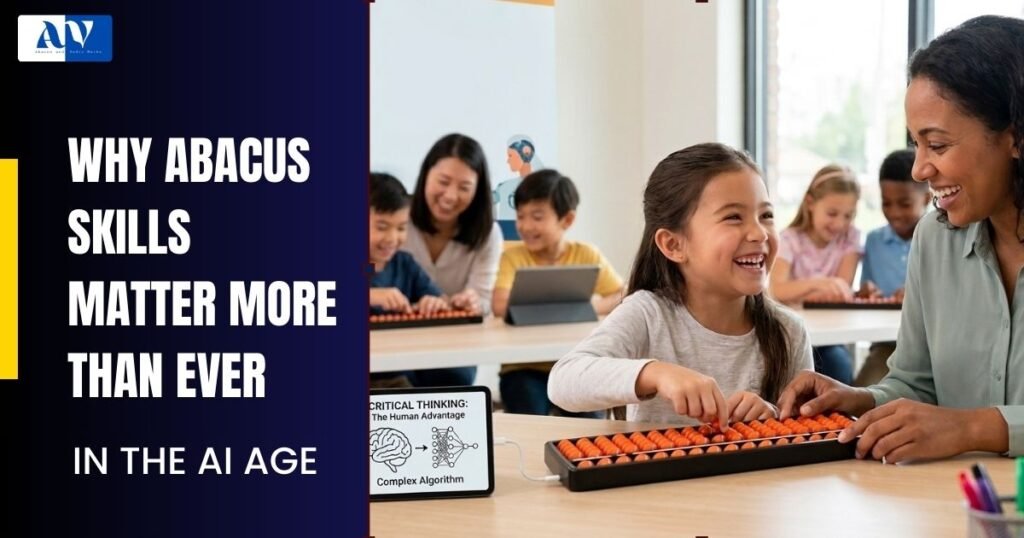
Out here, gadgets speed up every moment, and machines shape daily routines. Self-guided vehicles and automation slip into homes, yet not everything new wins. Ancient tools like the abacus stay firm, sharpening minds more than screens ever could. Handling beads builds memory and focus step by step; sliding rods trains deeper thinking, while tech solves everything instantly.
Abacus Meaning and Modern Importance

Older than most number tools, the Abacus training course helps people add, subtract, multiply, or divide numbers. The real gain is sharper thinking and a better mental grasp of math ideas. Though machines manage basic calculations, people good with the abacus crack hard challenges quickly—often in inventive ways. Success shows up clearly on tests such as the SAT, GRE, or math Olympiads, building stronger skills across subjects like science, logic, and numbers.
Cognitive Gains From Learning the Abacus
Working at it every day tunes up the mind’s left and right together. What begins as bead movement turns into mental coordination.
- Sharper Attention: Moving beads by hand requires eyes, hands, and mind to work together without digital help, building mental stamina.
- Better Memory: Kids visualize bead movements internally, sharpening recall for tougher topics later on.
- Faster Calculation: Quick math skills from online abacus training let learners solve problems faster than electronic devices.
- Self-Belief: Progressing step by step builds confidence, making school math feel easier.
Abacus Versus AI
Machines handle numbers fast but miss human instinct. Kids who learn with an abacus build minds that bend around problems. Breaking down tough issues structurally makes confusion fade. While processors run steadily, human minds thrive under pressure through effort. Ancient methods prepare young learners differently from how digital tools do.
Vedic Maths Works With Abacus Learning
While the abacus builds mental visualization, Vedic maths offers shortcuts for fast calculations through basic rules. Together, they:
- Enable lightning-fast calculation speeds.
- Improve accuracy in arithmetic and algebra.
- Strengthen logical reasoning and competition confidence.
Abacus Skills in Everyday Life
Imagine handling numbers without a phone—splitting bills or tracking time faster than before. Quick financial estimations and swift business decisions follow. Solving real-life issues means thinking step by step; a steady mind handles puzzles well. Top marks and scholarships link to this steady preparation. When machines run tasks online, thinking fast and right still matters for making choices.
Early Training Builds Strong Foundations
Young minds adjust best between ages four and twelve. Mental flexibility peaks then, allowing skills to take root and last longer. Brain pathways form quickly in childhood, so practice here shapes thinking for future tests and job hurdles.
- Develop strong neural connections for logic.
- Improve attention span and memory.
- Build confidence through real tasks.
Abacus and Vedic Maths Programs
When selecting a program, consider:
- Certified Trainers: Expertise leads the way to reliable learning paths.
- Integrated Curriculum: Mixing abacus work with Vedic techniques keeps minds flexible.
- Interactive Learning: Figuring out answers in class helps understanding grow.
- Progress Tracking: Checking changes highlights what is working.
Some folks pick online meetings because they save time. Others like showing up in person when it works better that day.
Children Adjusting Alongside Smart Machines
Kids gain sharp minds through these methods to critically evaluate AI output. They develop memory and visualization abilities that AI cannot replicate. Backing Abacus and Vedic maths gives kids more than basic skills; they gain the thinking tools vital for thriving amid advancing technology.
Conclusion
In Dubai, educators and families choose these tools to shape young minds. They build number sense and sharpen how children react under pressure. Though machines handle more tasks now, real understanding grows inside a child through online abacus classes, sparked by old methods meeting today’s classroom life. Solving problems step by step builds clear pathways that machines simply cannot mimic.